

Work, Fun and Community: The Bauhaus Was a Place of Learning – But Also a Way of Life.
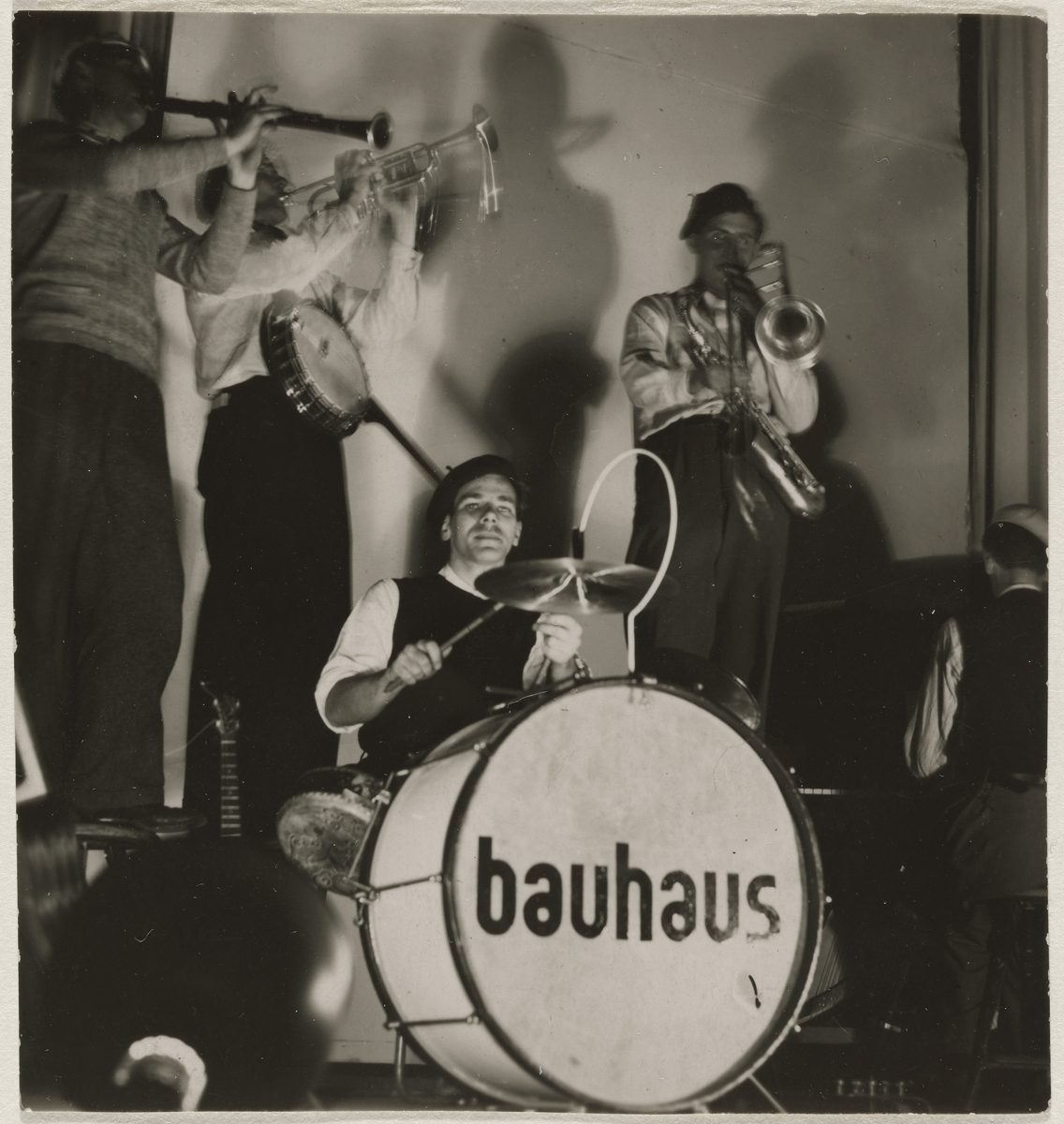
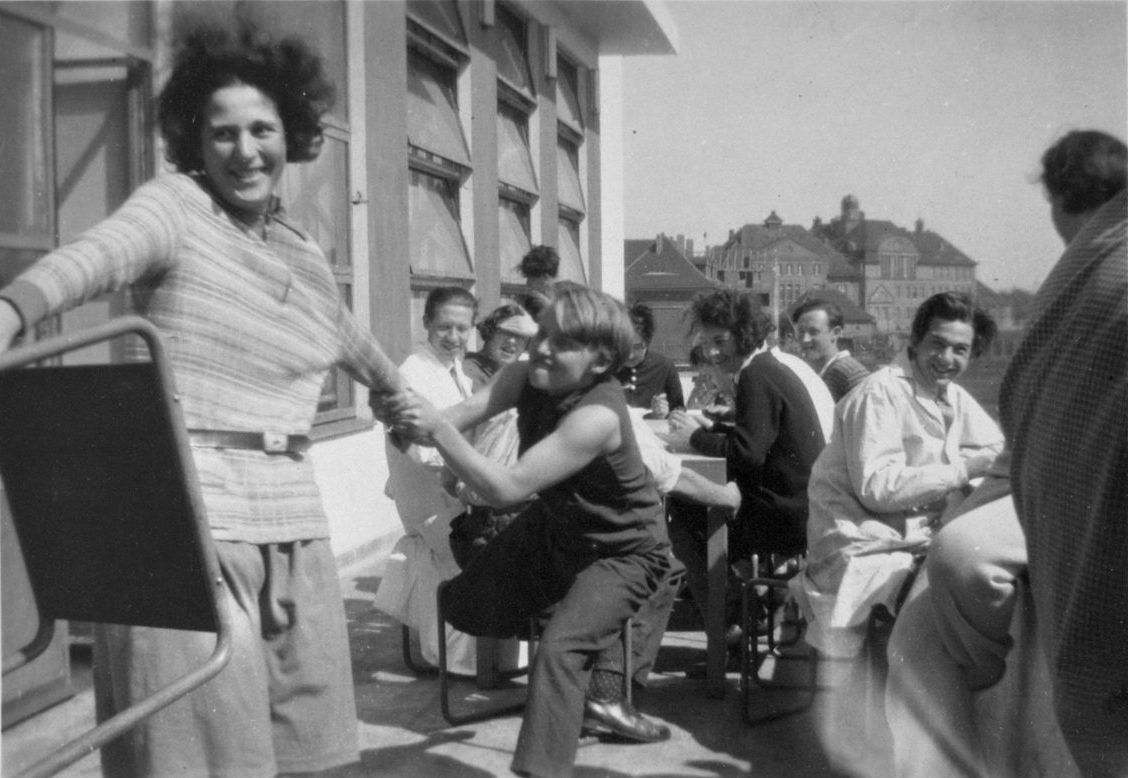
A sense of community played a major role at the Bauhaus. This was evident not only in the collaborative efforts of the workshops and projects, but also in many group leisure activities.
In the so-called manifesto, in which Bauhaus director Walter Gropius announced the programme of the new school, he already included “theatre, lectures, poetry, music, costume parties” as an integral part of an education there. In addition, the “development of a cheerful ceremoniousness at these gatherings” was supposed to help the community grow together. The students also lived and ate together, went on excursions to the surrounding area and took part in various sporting activities. They captured this aspect of their everyday lives in numerous photographs. Even today, these images of cheerful, young people bear witness to an attitude towards life that promises the dawn of a “modern” age.
Teachers and students gave free rein to their creative enthusiasm at the famous Bauhaus parties. For weeks, they worked on the organisation and design of festivals with themes like lantern, kite and Christmas – or the “Beard, Nose and Heart Festival” and “Metallic Festival / Bell-Jingle-Chime Festival”. Almost all of the workshops contributed costumes, decorations or invitation cards. From 1923, the Bauhaus’s own band played with a changing line-up and sometimes unusual instruments at these festivals, which made a significant contribution to strengthening connections between Bauhaus members and the public.
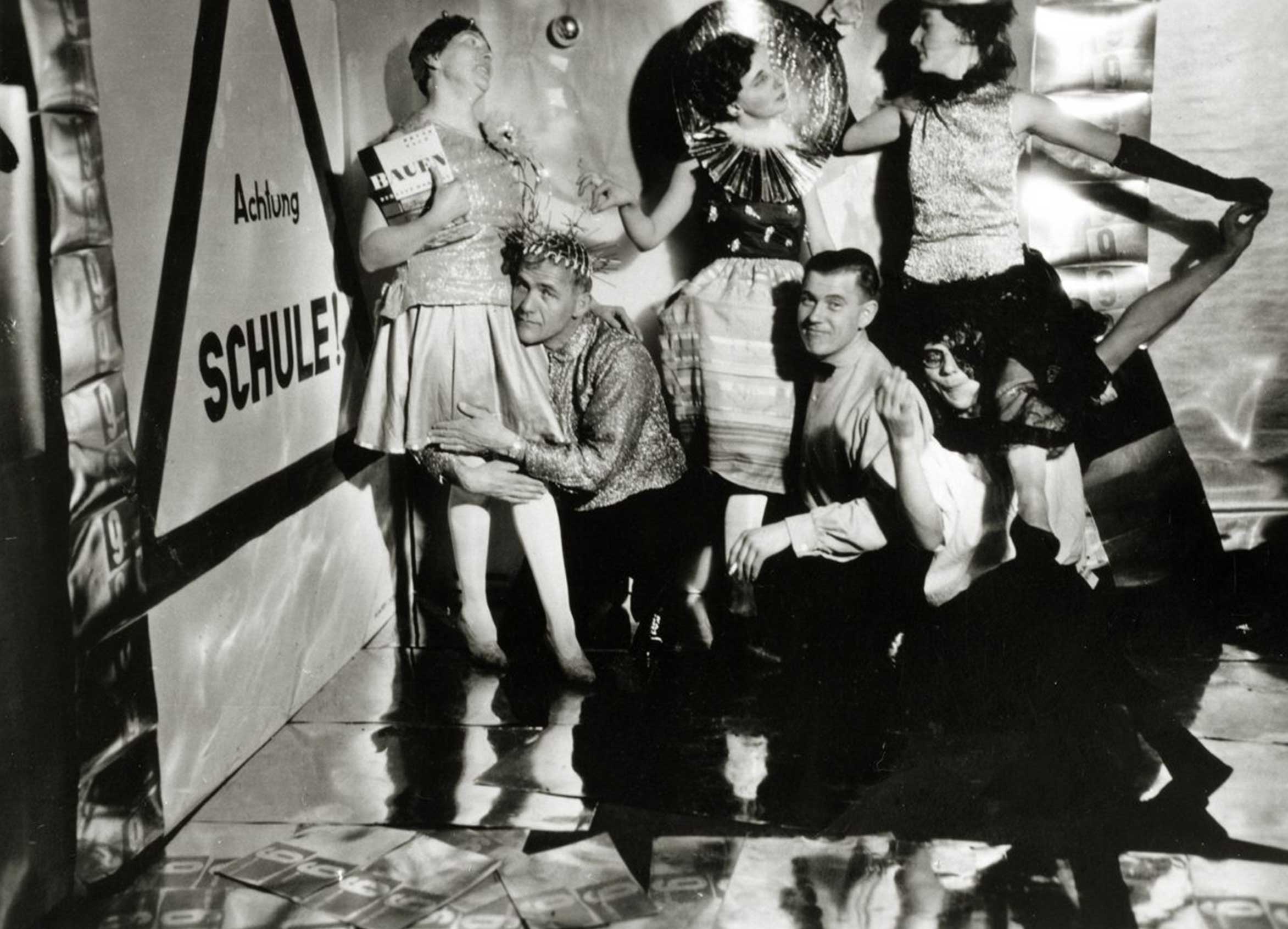 People celebrating, “Metallisches Fest / Glocken-Schellen-Klingelfest” at the Bauhaus Dessau, 9 February 1929, with Margaret Leischner, Hannes Meyer, Gertrud und Alfred Arndt, Lis Beyer-Volger, Joost SchmidtBauhaus-Archiv Berlin, Photo: unknown
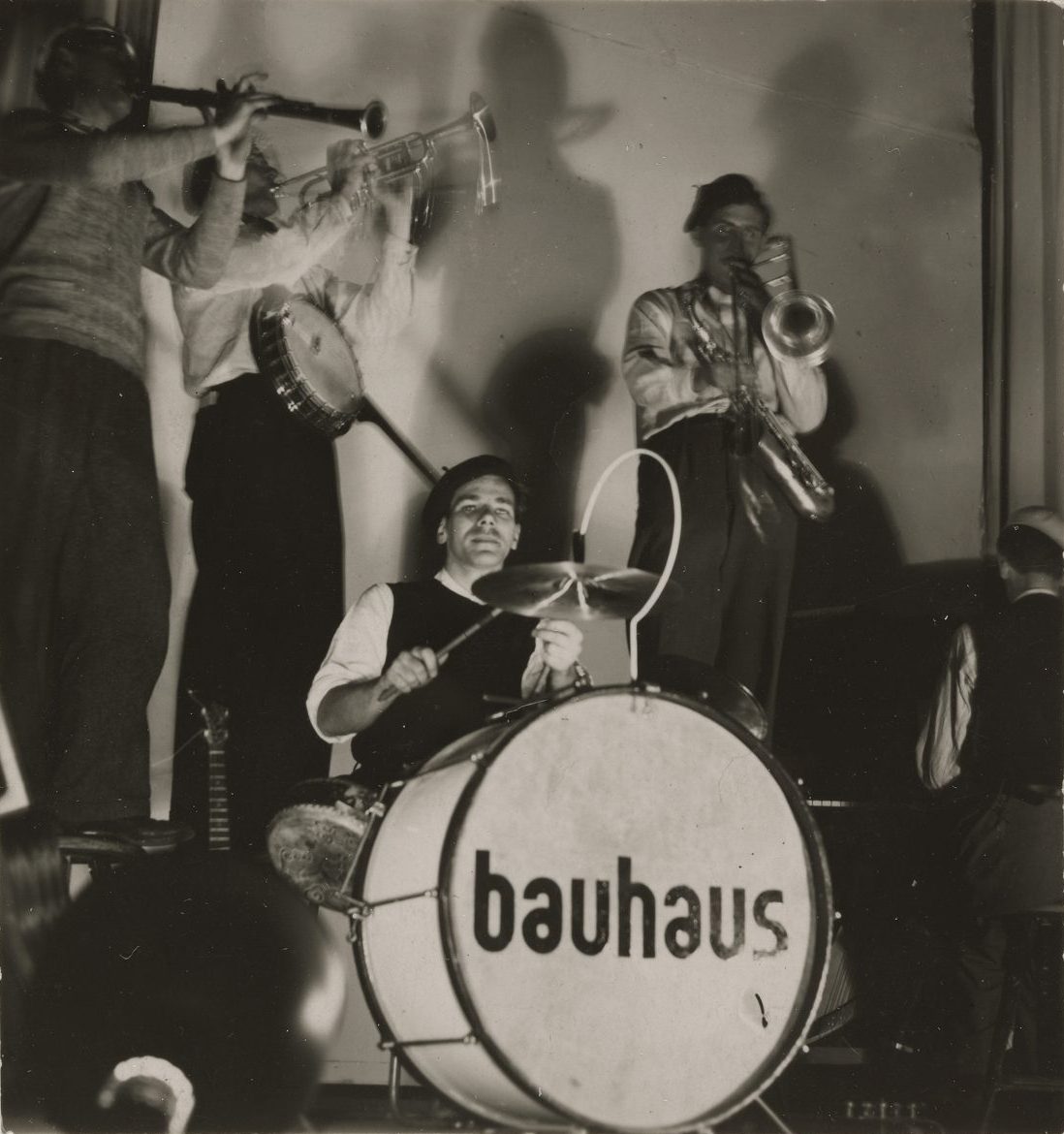 The Bauhaus Chapel plays, with T. Lux Feininger, Waldemar Alder, Ernst Egeler, Clemens Röseler and Friedhelm Strenger, 1930Bauhaus-Archiv Berlin, Photo: unknown
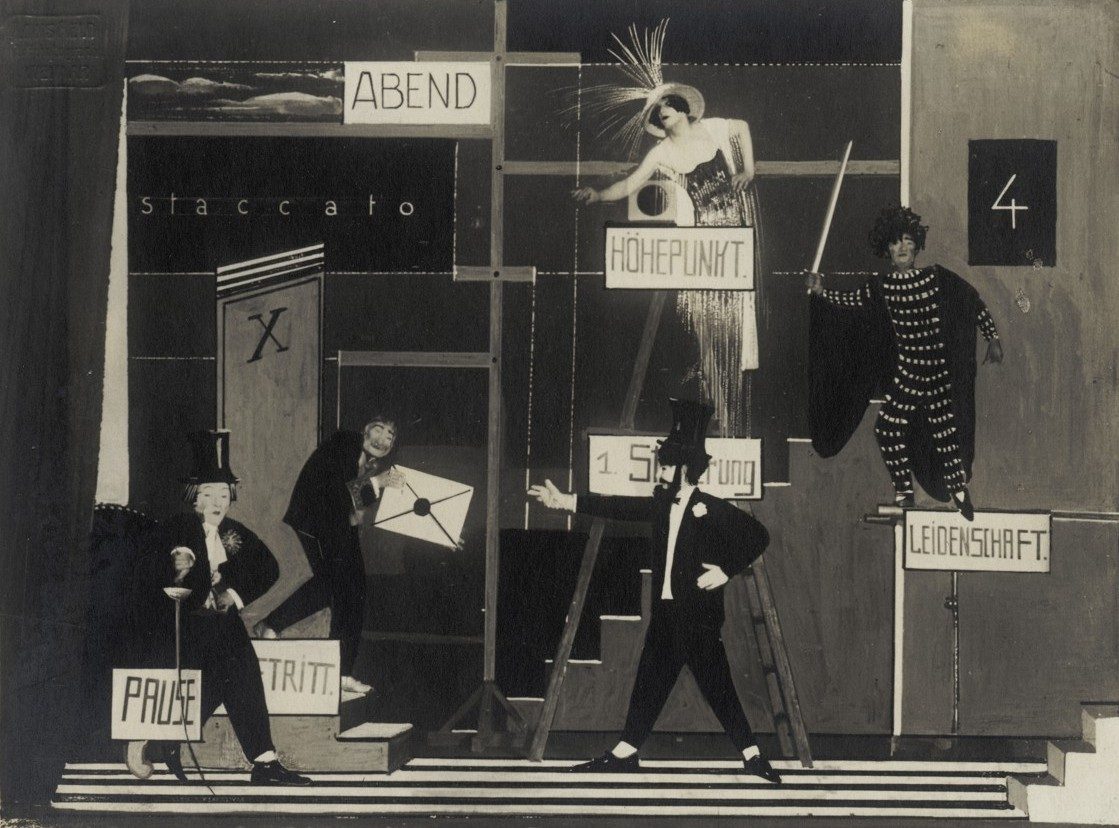 “Meta oder die Pantomime der Örter” by Oskar Schlemmer, presumably performed at a celebration at the Ilmschlößchen in Weimar on 29 April 1924Bauhaus-Archiv Berlin, Acquired with the support of the, Photo: Louis Held
In general, “playfulness” served a major role at the Bauhaus and was intended to help students develop their own creativity. With the Bauhaus stage, initially led by Lothar Schreyer and from 1923 by Oskar Schlemmer, the students explored free play, the opportunity to try out new types of plays on stage and to experiment with movement, language and sound as well as new materials and techniques. During the mere 14 years of its existence, the Bauhaus was repeatedly threatened, antagonised and persecuted. It was closed no less than three times for political reasons. It is possible that the constant threat of the school’s closure generated great internal solidarity. After the Bauhaus was closed under Nazi pressure, many of its members kept in touch and supported each other for decades.
Bauhaus Insights
-
The Bauhaus: The Idea Behind the School and Its Educational Programme
Bauhaus Insights -
Preliminary Course, Workshops and Bauhaus Diploma: What Made Training at the Bauhaus So Special?
Bauhaus Insights -
14 Years of Bauhaus: A Chronology From Its Founding in 1919 to Its Closure in 1933
Bauhaus Insights -
The Bauhaus in Exile: What Happened After its Closure in 1933
Bauhaus Insights -
Bauhaus Knowledge in a Nutshell: FAQs About the Bauhaus
Bauhaus Insights